


Why You Feel Stuck (and Why Your Body Holds the Key to Moving Forward)
Have you ever wondered why you can’t seem to make a decision, even after you’ve thought about it for days?
Maybe you’ve made lists.
Journaled.
Asked friends for advice.
Played every possible outcome through your mind.
Yet the way forward still feels hidden.
Many of us have been taught that healing happens through thinking. We live from the neck up, trusting our minds while overlooking the quiet wisdom of the body that carries us through life. But what if the reason you can’t see a way forward isn’t because you need another idea? What if your body simply doesn’t feel safe enough for your mind to imagine new possibilities?
Your brain changes when you don’t feel safe.
When we’re overwhelmed, grieving, anxious, or carrying unresolved stress, our nervous system shifts into protection. In those moments, the parts of the brain responsible for creativity, curiosity, long-term planning, and flexible thinking become less accessible. Instead, our energy is directed toward survival.
We begin asking questions like: “How do I get through this?”
instead of
“What’s possible from here?”
It’s not that you’ve lost your creativity. It’s that your nervous system is doing exactly what it was designed to do.
When your brain perceives a threat, whether it’s a charging bear, an angry email, grief, financial uncertainty, a difficult relationship, or a painful memory, it doesn’t distinguish very well between physical and emotional danger. It asks one simple question: “Am I safe?”
If the answer is “not completely,” your nervous system shifts into protection.
Structures like the amygdala become more active while the parts of the brain involved in reflective thinking, creativity, learning, and seeing new possibilities become less influential. Stress hormones are released. Muscles tighten. Breathing becomes shallower. Energy is redirected toward helping you survive rather than explore. From an evolutionary perspective, this makes perfect sense.
Imagine our ancestors walking through the forest. If they heard something rustling in the bushes, the brain didn’t pause to wonder, “Could it be a beautiful new species of bird?” It prepared the body to run.
Or fight.
Or freeze.
Curiosity could wait. Survival couldn’t.
Thousands of years later, the same nervous system is still doing its job. The predator may now be burnout, divorce, illness, conflict, uncertainty, or grief. But your body often responds with the same ancient protective strategies. Protection can look like:
- narrowing your attention to problems
- becoming hypervigilant
- feeling unable to make decisions
- losing access to creativity
- withdrawing from others
- feeling numb or disconnected from your body
None of these responses mean you’re failing. They mean your nervous system believes it is helping you survive.
Emotions don’t only live in the mind.
Western culture often treats us like floating heads. We value thinking over feeling. Productivity over presence. Logic over sensation. Yet emotions aren’t simply thoughts .Every emotion is accompanied by chemistry flowing throughout the entire body.
Sadness can feel heavy in the chest.
Fear may tighten the stomach.
Grief may settle in the throat.
Anxiety often shows up as shallow breathing, clenched jaws, or shoulders creeping toward our ears.
Our bodies remember experiences long after our minds have tried to move on.
Sometimes what we’re carrying isn’t only today’s stress, but years of unexpressed emotion, old hurts, and protective patterns that once helped us cope.
Safety comes before possibility.
One of the most powerful questions we can ask isn’t, “How do I fix this?” Instead, try asking, “How can I help my body feel just a little safer?”
Because when the body begins to settle, something remarkable happens.
Breath deepens.
Vision widens.
Ideas return.
Creativity reawakens.
Our capacity expands, not because the problem disappeared, but because we are no longer meeting it from a state of survival.
Small ways to help your body remember safety.
When you notice yourself feeling overwhelmed, try one of these gentle practices.
- Move your feet. Take a slow walk, even if it’s only around the room or outside for a few minutes. Rhythm and movement help remind the nervous system that you are no longer frozen.
- Breathe into your back body. Many of us breathe only into the front of the chest. Imagine your breath gently expanding between your shoulder blades. This simple visualization can create an unexpected feeling of spaciousness and support.
- Imagine breathing through the soles of your feet. Let your awareness travel downward, connecting you with the earth beneath you. This often brings us out of racing thoughts and back into the present moment.
Notice where emotion lives in your body.
Rather than pushing uncomfortable feelings away, gently ask yourself, “Where do I notice this in my body?” You don’t need to fix it immediately. Sometimes simply allowing yourself to feel what is already there is what begins the healing. We don’t expand our capacity by avoiding emotion. We expand it by discovering we can safely experience emotion without being overwhelmed by it.
Why horses are such powerful teachers
Everything we’ve explored so far points toward one simple truth:
Before the mind can imagine new possibilities, the body often needs to remember what safety feels like.
This is one of the reasons I believe horses are such extraordinary partners in healing.
Not because they heal us. Not because they solve our problems. But because they invite us into an experience that is becoming increasingly rare in our busy lives:
Coming home to our bodies.
Horses live in constant relationship with their nervous systems. Their awareness begins with breath. With sensation. With subtle shifts in tension.
Like us, they continually assess their environment, asking a version of the same question:
“Is it safe?”
When safety is present, curiosity naturally follows.
Play emerges.
Learning becomes possible.
Connection deepens.
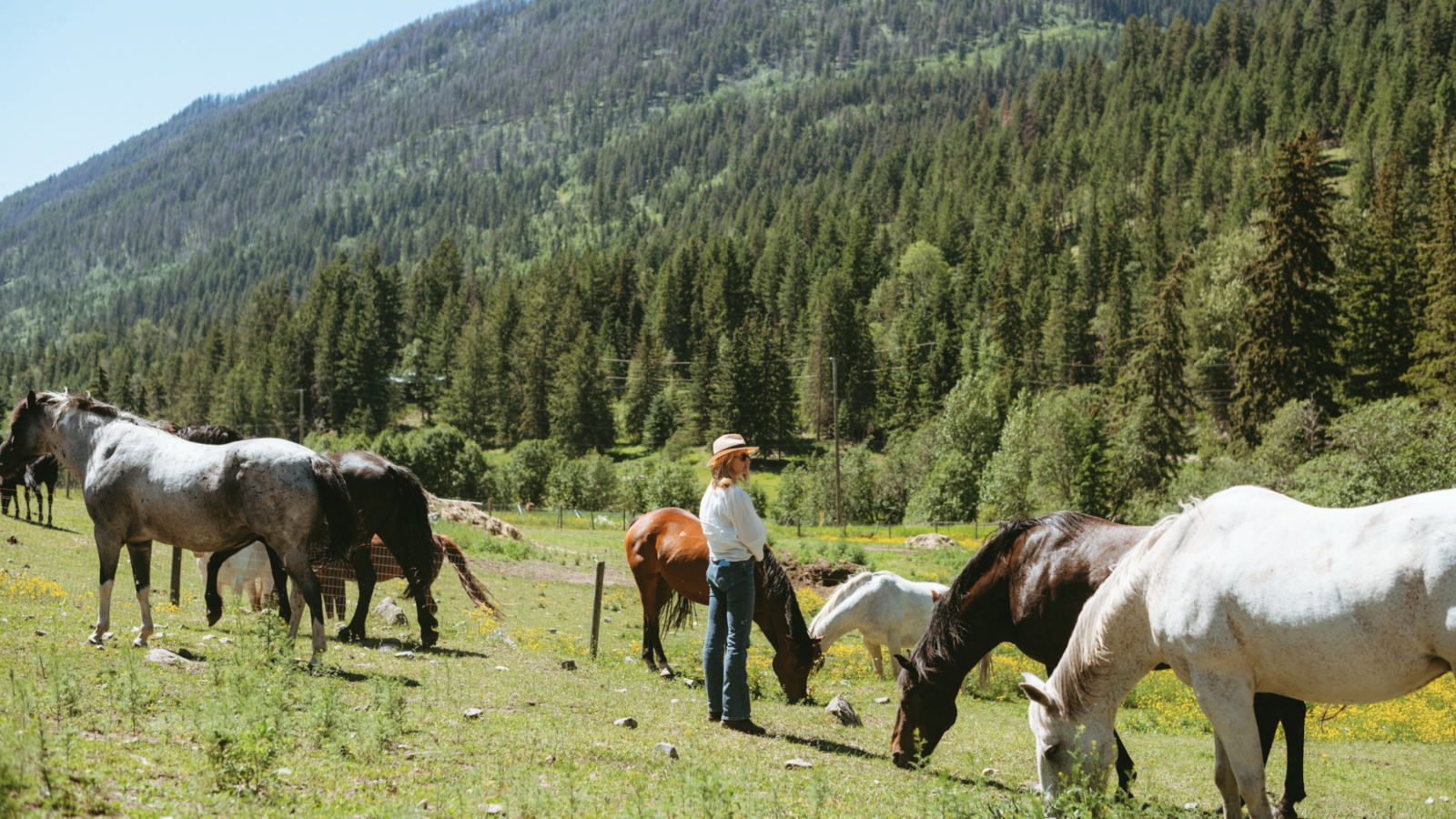
Humans aren’t so different. The challenge is that many of us have learned to search for safety through thinking. Horses quietly remind us that safety is first experienced in the body.I’ve experienced this many times while sitting quietly with horses. There have been moments when I entered the paddock carrying questions I couldn’t answer.
I wanted clarity.
Direction.
A solution.
Yet as my breathing slowed and my body softened, something unexpected happened. I stopped wondering whether the horses would come to me. I simply became another regulated being in the field.
Nothing outside of me had changed.
Yet inside, I was no longer meeting life from survival.
And from that place, new possibilities often began to emerge.
Not because the horses had solved my problems.
But because my nervous system had found enough safety for my own inner wisdom to become accessible again.
Horses don’t heal us.
People sometimes ask whether horses heal us.I see it a little differently.
Horses don’t heal us. They help create the conditions in which our nervous system remembers how to heal.
Without asking us to explain ourselves.
Without offering advice.
Without trying to fix us.
They quietly invite us back into presence.
Back into breath.
Back into our bodies.
Sometimes that is where healing begins. Sometimes the way forward isn’t another thought.
Sometimes it’s a breath.
A step.
A feeling.
A return to the quiet intelligence of the body.
——
If you’re navigating a life transition and longing for a place where your nervous system can soften and your inner wisdom can emerge,this is the heart of what we explore together during my horse-guided sessions at Soul Space Coaching.

