


What Happens When We Simply Watch?
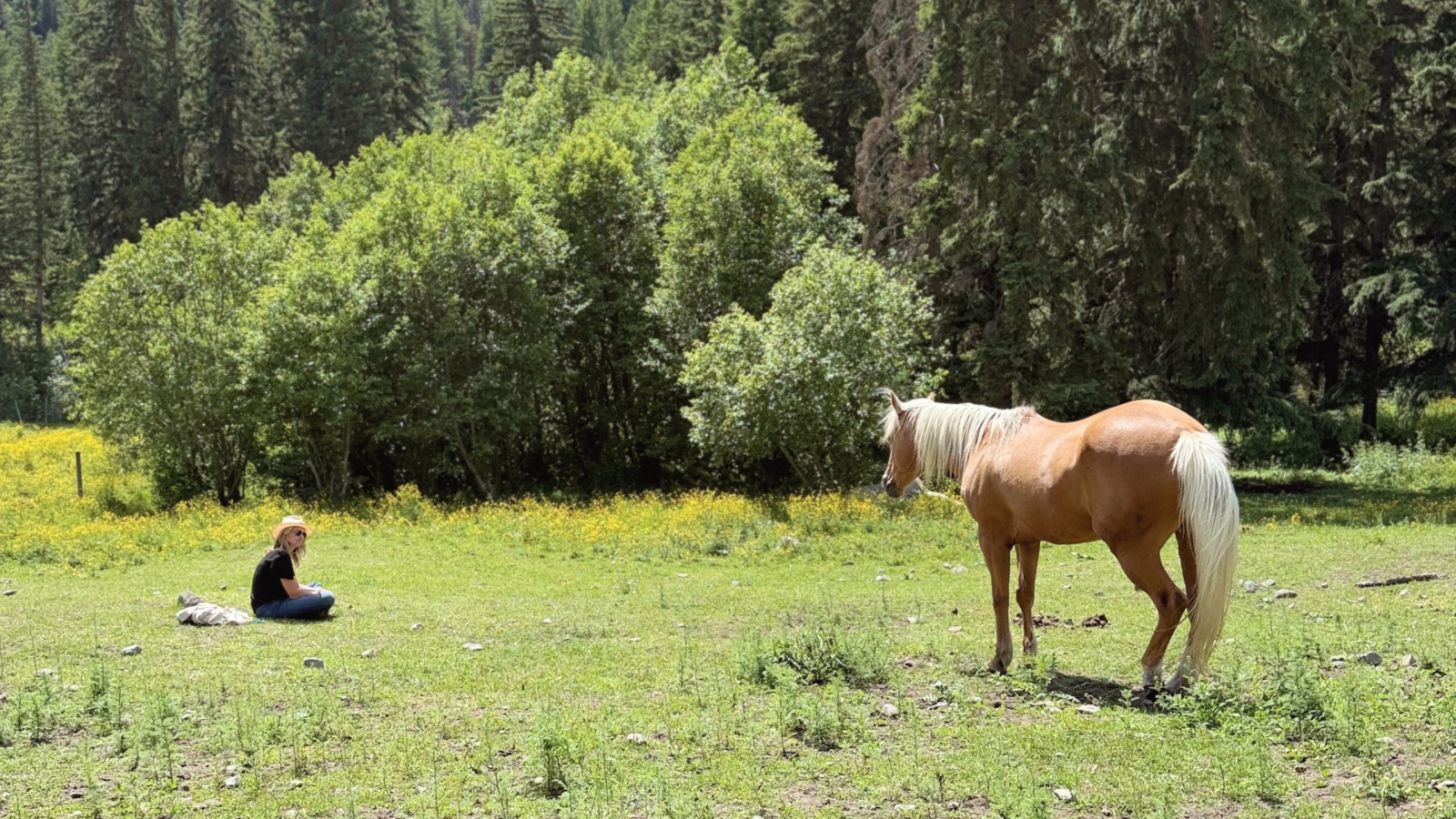
I recently received an email reflection by filmmaker and horsewoman Stormy May about how often we interrupt horses. We do this not because we’re unkind, but because we’re enthusiastic. Her words made me think about how often I have done exactly that.
We love horses, and naturally we want to connect with them. We see one standing quietly at the fence and reach out to touch them. We notice two horses sharing a tender moment and pull out our phones to capture it. A horse is staring intently into the distance and we call their name.We want to be part of the moment.
But lately, I have been wondering what might happen if, instead, we simply watched.
Horses have lives that don’t include us
One of the gifts of spending so much time around horses living in herds is the opportunity to witness the rich lives they have with one another. They have friendships and preferences. They rest, play and communicate. They choose who they stand beside and who they move away from. They groom certain horses and not others. They notice tiny changes in their environment that we often miss. Sometimes they become completely absorbed in something I can’t see or understand.
And increasingly, I find that fascinating.
For much of my life with horses, my attention naturally went toward my interaction with the horse. What could we do together? Could I touch them? Could I halter them? Could I ride them?
Even affection can carry an expectation of participation. We see a horse we love and immediately want to enter their space, stroke their face, scratch their favourite spot or call them over.
None of those things is inherently wrong. But they do put us at the centre of the interaction. I’m becoming increasingly interested in what I can learn about horses when I take myself out of the centre.
This has become a simple practice for me. Before I approach a horse, call their name or reach out to touch them, I pause.
What was this horse doing before I arrived?
Where is their attention?
Who are they standing beside?
What is happening in their body?
Are they resting? Watching? Listening?
And perhaps most importantly:
Do I need to become part of this moment?
Sometimes the answer is yes. A horse may turn toward me, approach or clearly seek connection. Those moments can feel even more meaningful because I haven’t automatically assumed that my presence is wanted.
And sometimes the answer is no.
I can stay where I am and watch.
Observation is part of horsemanship
I wonder if we sometimes underestimate observation because it doesn’t look like we’re *doing* very much. There is no exercise. No training goal. No obvious accomplishment. But I have started to think of watching horses as an important part of my horsemanship. The more I watch, the more questions I have.
I’ve become fascinated by who chooses whom within a herd. Who rests beside whom? Who moves when another horse approaches? Which horses share space easily? Who initiates contact? Where does each horse prefer to stand? Who watches while the others rest? And what rituals and rhythms are happening every day that I haven’t noticed simply because I’ve been too busy interacting?
There is an entire social world unfolding in front of us. We miss a great deal of it when our first instinct is always to step inside.
There’s another challenge in simply watching horses.
We humans like explanations. We see two horses standing together and decide they are best friends. A horse walks away and we think they’re upset. A horse comes toward us and we interpret it as affection. Sometimes we may be right. Sometimes we may not be.
Observation asks something different of us. Instead of immediately deciding what a behaviour means, we can become curious about what actually happened.
She walked toward the other horse. He moved away. They stood together for ten minutes. She rested while he remained standing nearby.Those observations may eventually help us understand patterns. But we don’t necessarily need to create a story about every moment as it happens. I’ve found something freeing in allowing myself to say: I don’t know what that meant. But I noticed it. And then continuing to watch.
Try simply watching
The next time you’re with horses, try giving yourself ten minutes when you don’t ask anything of them. Don’t call anyone over. Don’t reach for a halter. Don’t try to create connection.
If it’s safe to do so, find somewhere comfortable outside their immediate space and watch.
-Notice where each horse chooses to be.
-Notice where their attention goes.
-Notice the small movements between herd mates.
-Notice what changes, and what doesn’t.
And notice your own impulse to participate. You may be surprised by how strong it is. I still feel it. I love horses. Of course I want to touch them, talk to them and be part of their world. But I’m learning that relationship doesn’t require me to enter every moment.
Sometimes I can remain at the edge of it.
There is so much about horses I still want to understand. Perhaps one of the best places to begin is by interrupting them a little less.
And watching a little more.

